Loading...
Serving South San Francisco, CA and surrounding areas. (650) 822-6266
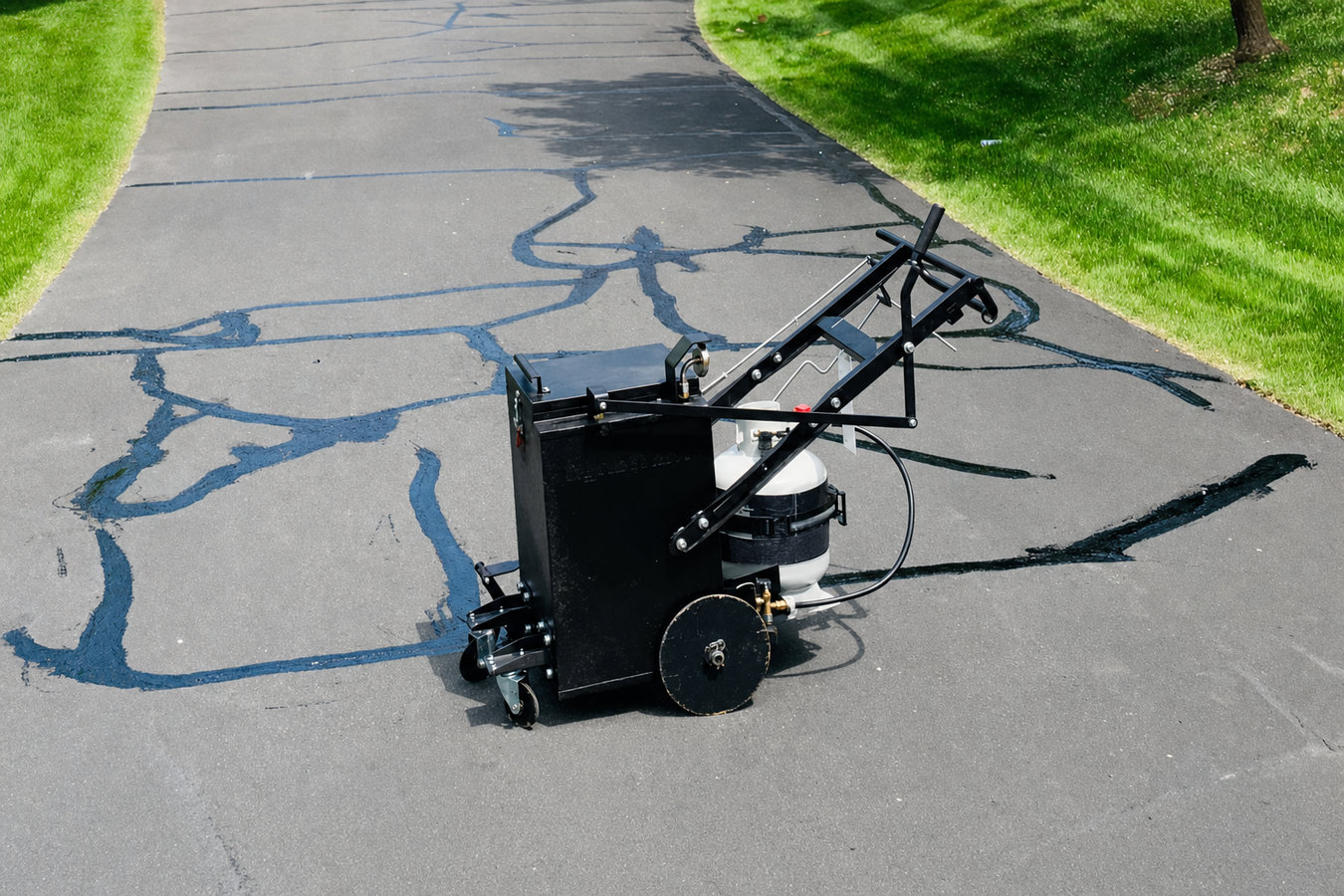
Small cracks let water reach the base beneath your driveway. We clean, prepare, and seal each crack with hot-pour rubberized sealant before the Bay Area rainy season can do more damage.
Asphalt crack sealing in South San Francisco cleans each crack with compressed air, fills it with a flexible hot-pour rubberized sealant that bonds to both sides, and blocks water from reaching the base - most residential driveways are completed in a single morning with the surface ready for normal use within a few hours.
This is a protective service, not a cosmetic one. A crack that looks minor on the surface can allow water to travel down into the gravel base beneath your asphalt. Once that base gets wet and soft, the pavement above it begins to sink and fracture in ways that a simple seal cannot fix. In South San Francisco, where the rainy season runs from November through April and the clay soils beneath many driveways shift with every wet-dry cycle, catching cracks early is the most cost-effective thing you can do for your pavement.
Crack sealing pairs naturally with asphalt sealcoating - sealing the cracks first, then applying a surface sealcoat, gives your driveway protection from below and above. Doing them in the wrong order means the sealcoat bridges over an open crack and fails in the same spot within a season.
If you can see lines running across or along your asphalt - even ones that look thin or minor - those are the right time to act. In South San Francisco, where soil movement is common under many driveways, small cracks can widen quickly as the ground shifts beneath the surface. The crack you see today is smaller and cheaper to address than the one you will see next spring.
When the Bay Area rainy season arrives, standing water near cracks is a warning sign. Water sitting in or next to an open crack is actively working its way into the base layer beneath your pavement. The longer it sits there, the more it weakens the foundation - and the more expensive the eventual repair will be.
When the edges of a crack begin to break apart and you can see loose asphalt pieces, the crack is no longer just a surface issue - it is getting wider and deeper. This is still a sealable problem, but it will not be for long if you wait. Loose edges mean the material around the crack has lost its bonding oils and is becoming brittle.
Asphalt that has turned gray and lost its dark color has lost much of its natural flexibility. Brittle asphalt cracks more easily, and in South San Francisco's salt-air environment, oxidation happens faster than in inland areas. Crack sealing at this stage, paired with a protective surface treatment, can reset the clock on your pavement before the damage becomes structural.
We offer residential crack sealing for driveways and private paved areas throughout South San Francisco - from single-crack repairs on newly formed lines, to full-driveway crack sealing sessions before the rainy season. Every job starts with a thorough cleaning of each crack using compressed air or a router tool, because preparation is the part of crack sealing that determines how long the repair holds. We use hot-pour rubberized sealant that stays flexible after it sets, which matters in a coastal environment where ground movement and temperature changes put constant stress on sealed cracks. For driveways ready for the next step after sealing, we also provide asphalt sealcoating to protect the full surface from moisture, salt air, and UV exposure.
When cracks have spread into larger areas of interconnected damage, sealing alone may not be enough. In those cases, we will assess whether targeted commercial asphalt paving or a section repair is the more cost-effective path. We give you a straight answer rather than selling you a service that will not solve the underlying problem.
Best for driveways heading into the rainy season with open cracks - seal them now while conditions are right, before November rains start the damage.
For cracks that are wide or irregular in shape, routing first gives the sealant a consistent channel to fill - the result holds longer than filling an unprepared crack.
Ideal for homeowners planning a sealcoat application - sealing the cracks first ensures the sealcoat bonds to a solid surface rather than bridging over open lines.
For driveways in the Bay Area that have developed new cracks after a seismic event - we assess whether the base is still sound before recommending sealing or a more involved repair.
South San Francisco sits in a coastal Bay Area environment that creates several compounding threats to asphalt. The ground beneath many South City driveways contains clay-heavy soils and, in lower neighborhoods near the bay, fill material that settles unevenly over time. This means cracks here are often caused by soil movement from below - not just surface wear from traffic - and they tend to reopen on a predictable cycle tied to the wet and dry seasons. The San Andreas Fault runs along the hills just west of town, and even minor seismic activity can open new cracks or widen existing ones before you notice them. Getting ahead of the rainy season with crack sealing is not just good maintenance practice - it is the most cost-effective way to protect what the ground underneath is working against year-round.
South San Francisco's coastal fog and salt air from the bay also matter. Morning damp keeps paved surfaces moist much of the year, and salt air accelerates oxidation of the asphalt binder - making the surface brittle and more prone to cracking faster than in dry inland areas. A contractor who accounts for these conditions - scheduling work for the warmer, drier part of the day and choosing sealant formulations suited to coastal moisture - will get results that last. We work throughout South City and in neighboring communities including Colma and Brisbane, where many of the same soil and climate conditions apply.
Call or submit a request and we will come out to walk your driveway at no charge. We look at every crack, assess whether the base is still solid, and give you a written estimate before any commitment. We reply within one business day.
We schedule the job for a dry stretch - ideally after morning fog has cleared and the surface has warmed. South San Francisco's coastal moisture means we watch the forecast carefully and will adjust the date rather than work on a damp surface that will compromise the bond.
On the day of work, the crew cleans each crack thoroughly with compressed air - and uses a routing tool on wider cracks to create a consistent channel. This step takes time and cannot be rushed. A crack that is not properly cleaned will not hold the sealant.
Hot-pour rubberized sealant is applied, leveled flush with the surface, and left to firm up. Most residential jobs are done in a morning. Keep vehicles off the treated areas for a few hours after the crew finishes - your contractor will give you the specific window based on the product and temperature that day.
We cover all of South San Francisco. Free written estimate. No pressure, no surprises.
(650) 822-6266The sealant is only as good as the surface it bonds to. We clean every crack thoroughly before applying a drop of material - because a seal applied to dirt or moisture will pull out within a season. Doing the prep right the first time is what separates a repair that lasts from one that does not.
South San Francisco's salt air, morning fog, and Bay Area soil movement create conditions that not every contractor accounts for. We schedule around local moisture patterns, use sealant formulations suited for coastal environments, and assess base conditions before recommending a seal on pavement that may need more than surface treatment.
California requires contractors performing pavement maintenance to hold a state license, which you can verify at cslb.ca.gov. We are fully licensed and insured, which means you have legal recourse if anything goes wrong and the contractor has met the state's baseline requirements for this type of work.
We tell you when sealing is the right call and when you need something more extensive. If your cracks are sealable, we seal them. If the base has failed and sealing would be wasted money, we tell you that plainly and explain what is actually needed. No pressure to buy more than the situation calls for.
These are the things that translate into a seal that holds through the rainy season rather than peeling out by spring. If you want to know more about our approach before committing, call us and ask - we are happy to answer questions before you book anything.
When cracks have spread to the point where sealing is no longer enough, we assess and build a proper commercial paving solution for your lot or drive.
Learn MoreThe natural follow-up to crack sealing - a full surface sealcoat applied over your sealed driveway to lock in the repairs and protect against moisture and UV.
Learn MoreSouth San Francisco's wet season arrives in November. Schedule now while surfaces are dry and conditions are ideal for a lasting seal.